


September 7, 2026
Solving the UK’s biggest engineering challenge


Engineering offers young people some of the most rewarding, future-proof careers available. So why is the sector facing a talent crisis? With a potential shortage of a million engineers by 2030, an ageing workforce and a shrinking talent pipeline, what’s getting in the way of young people becoming engineers, and what can the industry do about it?
What’s stopping young people from considering an engineering career?
Lower STEM engagement. Fewer young people study STEM subjects at GCSE and beyond - and those who do, don’t go on to study engineering. Students enjoy science subjects, but because they’re challenging, they’re seen as suitable only for ‘the brainiest’ individuals.
A gender imbalance. Girls are less likely to consider engineering than boys – only 16% of girls think engineering is for ‘someone like them’, compared to 44% of boys. Reasons given include the engineering industry still being perceived as male-dominated, and influencers reinforcing girls’ misconceptions about engineering careers.
A diversity of career pathways. The diversity of roles within the profession means it can be more complex to navigate through the variety of different branches, to find the right pathway for you that matches with your skills and interests.
A misunderstood career path. There’s little awareness of the discipline's creativity, problem-solving, teamwork, and technology. Instead, people think of building sites, oily hands and overalls, long antisocial hours and dangerous work.
What can the engineering industry do to build the pipeline?
Engaging young people with lower-profile careers needs to begin early – and the earlier the better. Studies have shown that interest in engineering drops as students grow older, yet half of the children who visited a relevant business said they were inspired to continue with STEM subjects. 45% of those who attended a talk from someone working in STEM said the same.
Work experience is critical, too: Engineering UK found that only 15% of students have completed STEM-related work experience. A further 26% of students wanted to but couldn’t secure a placement.
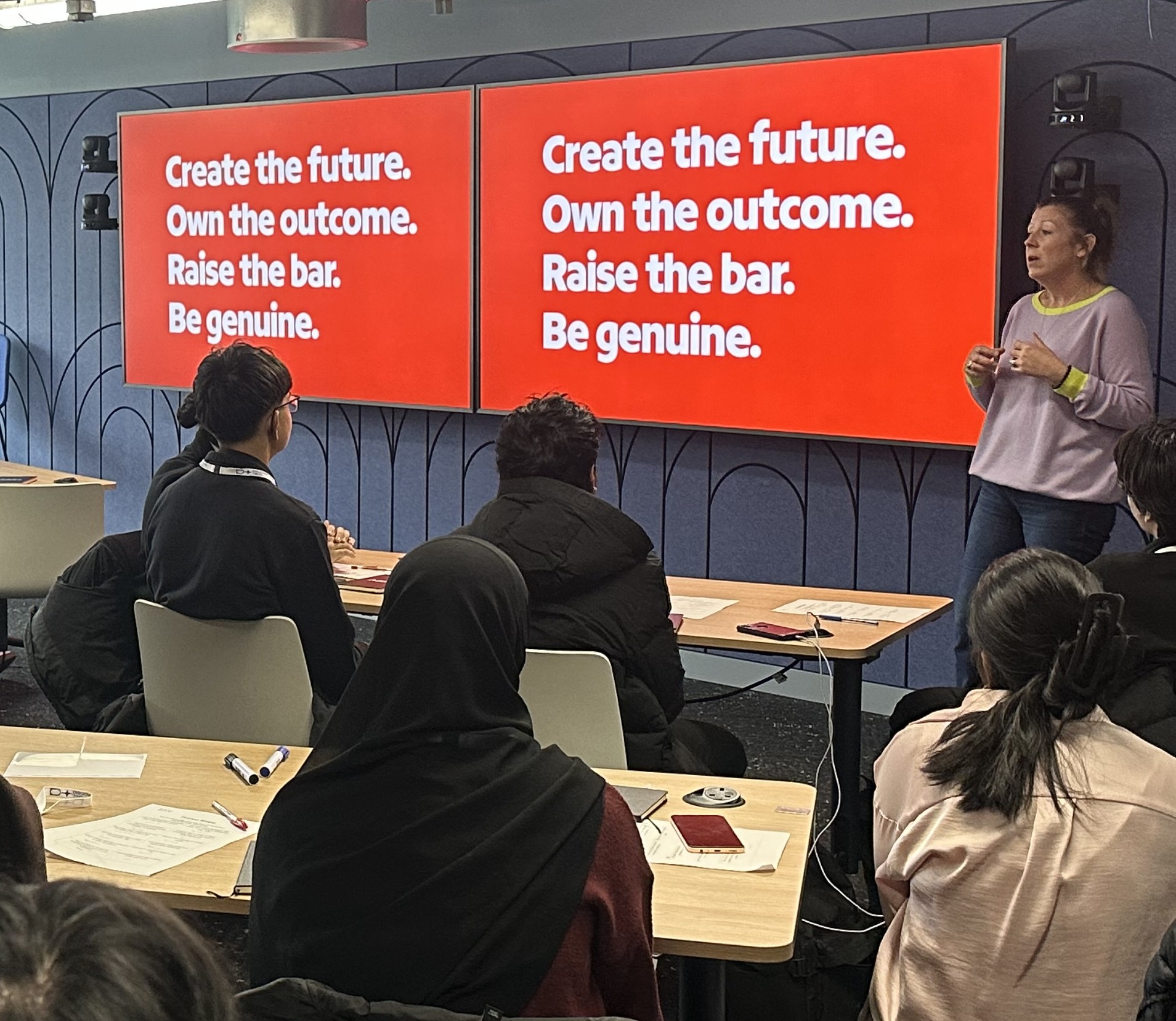
This week we met with industry leads from Laing O’Rourke, Mace Consult, GrainLNG, Costain and Arup, who share the industry-wide concern about engineering skills gaps in tomorrow’s talent. The room agreed that the scale of the challenge means organisation can’t solve this challenge alone: Collaboration will be critical.
Using a proven approach
The good news is that there’s a solution with a proven track record: collaborative work experience.
Take, for example, Discover Tech, a collaborative work experience programme driven by Cisco and supported by Connectr Early Engagement. The results are striking - 91% of initial participants said they're now likely to consider a career at one of the participating companies.
It’s an exciting shift for the sector, as Kathryn Baddeley, Head of CSR at Cisco UK & Ireland, puts it, “By working together – even as companies that might compete for talent – we can build a larger and more diverse talent pipeline. It’s not just about raising the bar for entry; it’s about raising the floor so more people can access opportunities.”
Making change happen
The industry leads we spoke to agreed that work experience was just the beginning – tracked hiring outcomes are critical to demonstrate a return on that social value spend. Clear, supported next steps are essential for this, helping young people make informed choices about their careers.
The project-based nature of the engineering industry demands creativity to make collaborative work experience happen. Those we spoke to agreed that a place-based approach is the best way to make this happen.
“We need to use systematic triangulation to identify where groups of employers can collaborate on work experience: We need to look at a combination of where there are 1) projects live or project clusters; 2) a local skills & talent gap; and 3) Social Value gaps.”
Martyn Scott, Head of Early Careers & Learning at Costain Group PLC
What’s next?
Initial discussions are focusing on identifying the right geographies and projects for a pilot: including Sizewell, the Humber carbon capture cluster, Leeds and the South West.
Interested in getting involved? Get in touch. We’re on the lookout for more forward-thinking organisations to join the pilot. To find out more, email rachel@ronnectr.co.uk.
Sources:
A shortfall of 1 million engineers threatens the UK’s infrastructure.
Summary of research into people’s perceptions of engineering.
What are the barriers teachers find in running practical science lessons?
Thank you! Your submission has been received!
Oops! Something went wrong while submitting the form.
Thank you! Your submission has been received!
Oops! Something went wrong while submitting the form.
We need to use systematic triangulation to identify where groups of employers can collaborate on work experience: We need to look at a combination of where there are 1) projects live or project clusters; 2) a local skills & talent gap; and 3) Social Value gaps.




Empowering Futures Starts with You